
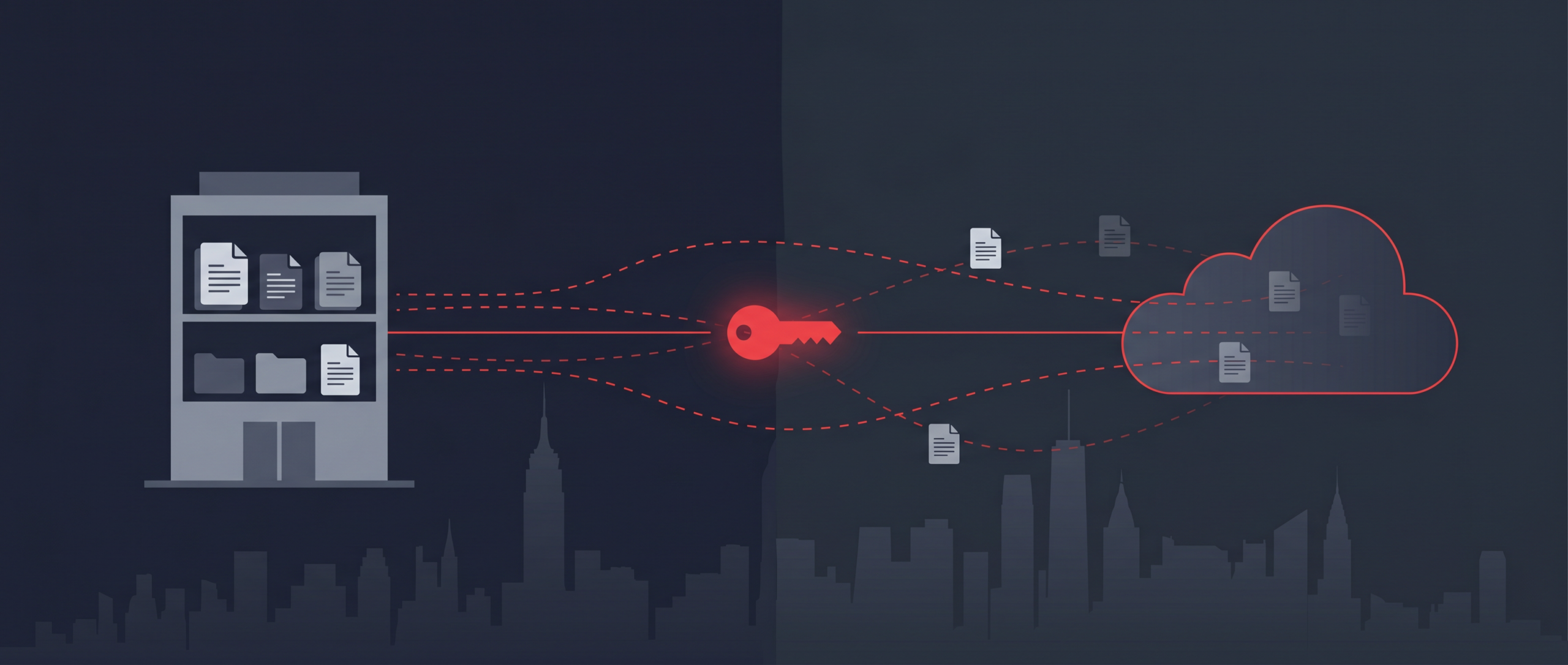
Walk around almost any office in Westchester, NYC, or Fairfield County right now, and you’ll find employees pasting client contracts into ChatGPT to summarize them, dropping spreadsheets into an AI tool to build a quick chart, or asking a chatbot to draft an email that references sensitive deal terms. Nobody asked IT. Nobody looped in leadership. It just happened, one convenient shortcut at a time.
This is called shadow AI, and it’s quietly becoming one of the biggest technology risks facing small and medium-sized businesses. Not because AI is dangerous – but because unmanaged AI usage means your company data is leaving the building in ways you can’t see, can’t audit, and can’t control.
How Shadow AI Sneaks Into Your Business
Shadow AI isn’t a single dramatic event. It’s death by a thousand small decisions:
– A paralegal pastes a portion of a client contract into a free AI tool to get a faster summary.
– A finance team member uploads a budget spreadsheet to get help building a forecast.
– A project manager feeds meeting notes containing sensitive client information into an AI note-taker nobody vetted.
– A new hire uses their personal AI account, on their personal device, to “help” with a company project.
Individually, each of these feels harmless — even productive. Collectively, they add up to sensitive company and client data sitting on servers your company never approved, governed by terms of service nobody read, with zero visibility for your IT team.
Why This Matters More for Certain Industries
For businesses in regulated or client-sensitive fields – law firms, financial services, healthcare, family offices, private equity – the stakes are higher. A single instance of client data or protected health information ending up in the wrong AI tool isn’t just an IT headache. It can mean a compliance violation, a breach of client confidentiality, or a very uncomfortable conversation with a regulator or a client’s general counsel.
Even businesses without formal compliance requirements have real exposure: trade secrets, employee data, financial projections, and competitive strategy are all things you don’t want floating around in an AI vendor’s training data or storage without your knowledge.
The Real Problem Isn’t AI. It’s the Lack of a Plan.
Here’s the thing – banning AI outright isn’t the answer, and most businesses know it. Employees who are told “no AI” simply use it anyway, just more quietly. The businesses getting this right aren’t the ones locking AI down; they’re the ones managing it deliberately, the same way they’d manage any other technology that touches sensitive data.
A solid AI governance approach typically includes:
1. Visibility first. You can’t manage what you can’t see. Understanding which AI tools your team is already using – sanctioned or not – is the starting point.
2. Clear, simple usage policies. Employees need to know what’s okay to put into an AI tool and what absolutely isn’t (client data, PII, financial records, source code, credentials). This doesn’t need to be a 40-page document. It needs to be clear enough that a busy employee actually follows it.
3. Approved tools with the right settings. Enterprise-grade AI tools, configured correctly, can be dramatically safer than consumer versions – data retention and training settings matter enormously here, and most default configurations aren’t the safe ones.
4. Ongoing training. Just like phishing awareness, AI risk awareness needs to be reinforced. New tools launch constantly, and what was safe six months ago may not be today.
5. Integration with your existing security stack. AI usage should be part of your broader cybersecurity strategy, not a separate, ungoverned category sitting outside it.
Turning a Risk Into an Advantage
Here’s the part that often gets missed: businesses that get AI governance right don’t just reduce risk – they move faster than their competitors. When your team has clear guardrails and sanctioned tools, they can actually lean into AI to save time, cut down on busywork, and focus on higher-value work, without every use case turning into a legal or security gamble.
That’s the difference between AI happening *to* your business and AI working *for* your business.
Where to Start
If you’re not sure how much shadow AI exists inside your organization right now, you’re not alone – most leadership teams don’t. The good news is that this is a solvable problem, and it doesn’t require slowing your team down or becoming the “no” department.
Red Key Solutions has spent over 20 years helping companies across New York, Westchester, Connecticut, and Los Angeles build IT environments that are secure, strategic, and built for growth – not just today’s AI questions, but whatever comes next. Our approach to AI Management & Automation and Cybersecurity Management starts with a clear picture of what’s actually happening in your environment, then builds a practical roadmap from there.
If shadow AI has been on your mind – or if it hasn’t been, and now it is – let’s talk. A short conversation can tell you a lot about where you stand, and what a smart next step looks like.